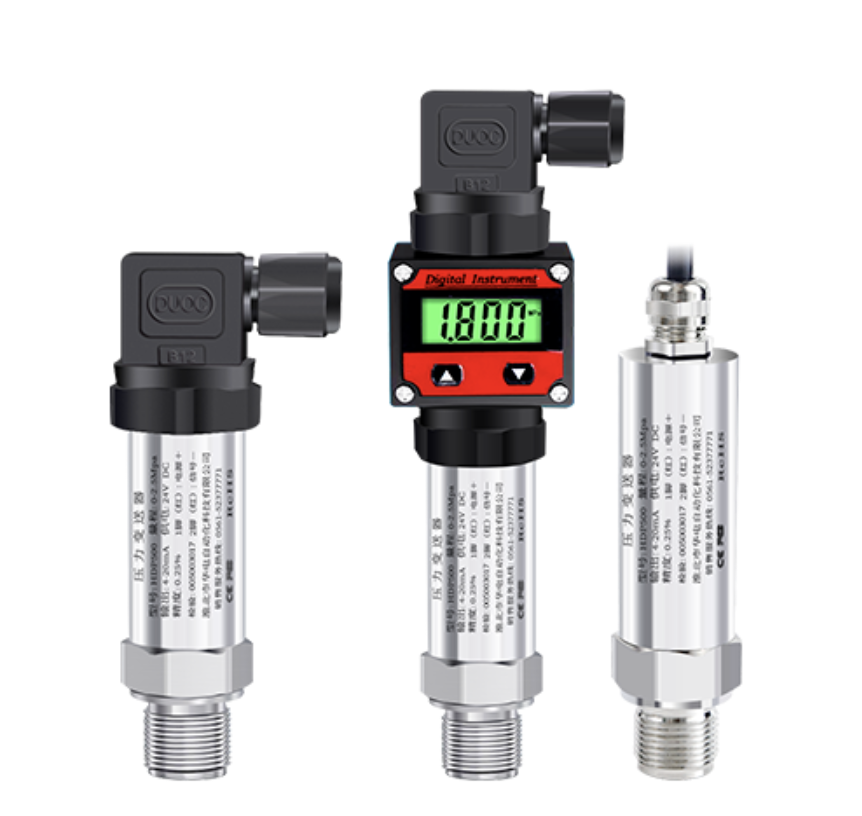
(Spin Digit Editorial):- Fengyang, Anhui Oct 11, 2026 (Issuewire.com) – Industrial pressure measurement demands extreme consistency when plant operators monitor automated hydraulic systems, chemical processing loops, and municipal water networks. While many piezoresistive sensors demonstrate excellent precision inside clean calibration laboratories, field deployment often exposes vulnerable sensor cores to dynamic pressure spikes, ambient thermal swings, and mechanical vibrations. Over time, these environmental stresses trigger zero-point drift and calibration hysteresis, causing measurement errors that disrupt automated process control. Operating as a Certified High-Precision Silicon Pressure Sensor Manufacturer (https://en.hd-a.cn/pro_detail/Compact_Pressure_Transmitter.html), a dedicated production facility integrates metrological rigor directly into every stage of fabrication. Rather than treating quality management as a static paper certification, leading manufacturers embed ISO 9001 principles into physical process design, automated sensor calibration, and comprehensive stress-relief testing. Consequently, process engineers gain reliable pressure transmitters that maintain factory calibration specs across years of continuous operation. This technical insight explores how structured manufacturing protocols translate quality management standards into tangible, long-term sensor stability for industrial applications. Piezoresistive Architecture: Form Factor Selection and Mechanical Isolation Mechanical design directly influences how an isolated silicon pressure core reacts to external pipeline stress and internal fluid pressure. Piezoresistive silicon chips offer high sensitivity and rapid response times. However, improper mechanical packaging can transfer mounting torque or thermal expansion stress directly onto the delicate silicon piezoresistors. Manufacturers solve this packaging challenge by developing application-specific housings that decouple the sensing element from mechanical strain. For standard industrial applications, compact pressure transmitters like the HDP500 series utilize rugged 316L stainless steel enclosures. These compact units fit easily into tight OEM machinery spaces, hydraulic power packs, and water distribution networks while withstanding high static pressures. In contrast, viscous fluids, slurries, and food processing lines present severe clogging risks to traditional internal pressure ports. To address these sticky media, engineers specify a flat diaphragm pressure transmitter (https://en.hd-a.cn/pro_detail/Compact_Pressure_Transmitter_-_Flat_Diaphragm_Anti-Clogging_Type.html) such as the HDP502 series. This flush-membrane design eliminates internal cavities and dead legs, preventing particulate accumulation while maintaining smooth fluid contact. Furthermore, low-range differential pressure transmitters utilize dual-chamber silicon elements to measure minute pressure drops across filters and cleanroom barriers. While traditional mechanical dial pressure gauges provide simple visual indication, they rely on mechanical Bourdon tubes and linkage mechanisms that suffer from wear and lack continuous electronic signal telemetry. Solid-state electronic transmitters eliminate these moving parts, providing reliable 4-20mA, 0-10V, or RS485 Modbus signal outputs for modern automated control systems. Phase 1: Automated Multi-Temperature Compensation and Digital Calibration The physical properties of piezoresistive silicon inherently cause sensitivity variations when fluid temperatures change. The Wheatstone bridge resistors formed on the silicon chip shift their electrical resistance in response to temperature fluctuations between -20°C and +85°C. Uncompensated silicon sensors can experience zero shifts exceeding several percent of full scale across wide thermal ranges. To neutralize these thermal effects, Huaibei Huadian Automation Technology Co., Ltd executes an automated, multi-point temperature compensation routine during sensor assembly. Technicians load batches of assembled pressure cores into environmental test chambers connected to automated pressure calibrators. The test system cycles the ambient temperature across defined setpoints while applying precise reference pressures. High-precision data acquisition hardware records the voltage output of each sensor bridge at every temperature and pressure step. Specialized Application-Specific Integrated Circuits (ASICs) onboard the transmitter board use this empirical dataset to calculate unique polynomial compensation coefficients. By digitally trimming the bridge signal, the ASIC cancels out thermal sensitivity drift and zero offset errors before technicians seal the enclosure. This digital compensation process guarantees that the transmitter delivers stable linear output regardless of seasonal or process temperature swings. Phase 2: Accelerated Thermal Cycling Aging and Mechanical Stress Relief In piezoresistive pressure transmitter manufacturing, initial calibration alone does not guarantee multi-year zero-point stability. The physical assembly process introduces residual mechanical stresses into the sensor housing. Laser welding of isolation diaphragms, curing of silicone potting compounds, and soldering of electronic circuit boards create microscopic internal tensions. If a manufacturer ships sensors immediately after final calibration, these internal stresses gradually relax over months of field operation. This mechanical relaxation manifests as gradual zero-point drift, forcing maintenance teams to recalibrate instruments frequently. To eliminate infant mortality and post-calibration drift, HHD subjects every pressure core to an accelerated thermal aging protocol, commonly known as a burn-in test. Production teams place assembled sensor modules into thermal stress chambers that repeatedly cycle between extreme low and high temperature limits under dynamic pressure loads. This controlled thermal cycling accelerates the relaxation of internal mechanical stresses, stabilizing the metallic crystal structures and electronic solder joints. By forcing these structural micro-adjustments to occur inside the factory, the aging process locks the mechanical alignment of the sensor assembly. As a result, finished pressure transmitters exhibit an annual zero-drift rate within 0.1% of full scale per year, providing long-term measurement consistency in demanding field environments. Phase 3: The 100% Factory QC Mandate: Metrological Rigor Beyond Statistical Sampling Quality assurance practices vary widely across the industrial automation industry. Many high-volume component suppliers rely on Acceptable Quality Limit (AQL) statistical sampling, testing only a small percentage of sensors from each production lot. However, statistical sampling inevitably allows defective or borderline units to reach customer facilities, creating unacceptable risks for mission-critical applications. To eliminate early field failures, HHD (https://www.hd-a.cn/aboutus.html) (Huaibei Huadian Automation Technology Co., Ltd) enforces a strict 100% pre-shipment quality control mandate. Every single transmitter passing through the assembly line undergoes rigorous multi-point verification before approval. Technicians perform a full-scale 5-point pressure linearity check to verify accuracy across the entire dynamic range. In addition, sensitive helium mass spectrometer leak detectors test the hermetic seal of isolated diaphragms, ensuring zero risk of oil fill leakage or process fluid ingress. High-voltage insulation testers also evaluate dielectric strength across electrical terminals to safeguard the electronics against power surges. The automated test system logs calibration data, zero stability values, and safety test results into a centralized database linked to the unit’s unique serial number. This digital record provides complete metrological traceability in full compliance with ISO 9001 and international safety standards such as CE and RoHS. Co-Engineering Partnership: Scalable OEM Manufacturing and Global Supply Reliability Modern industrial automation requires flexible manufacturing capabilities alongside strict quality standards. Machine builders and system integrators frequently demand customized mechanical and electrical configurations to simplify equipment assembly. A flexible manufacturing partner accommodates varied process connections, including standard G, NPT, and metric threads, while providing diverse electrical interfaces like M12 connectors, Hirschmann plugs, and integral cable glands. Beyond mechanical options, HHD supports OEM clients by offering tailored output signals spanning classic 4-20mA current loops, 0-10V voltage outputs, and digital RS485 Modbus communications. Providing comprehensive customization options allows system integrators to streamline their control architectures without compromising on sensor accuracy or durability. Furthermore, investing in rigorous quality control directly benefits the end user’s Total Cost of Ownership (TCO). By preventing field recalls and minimizing recalibration requirements, certified pressure transmitters reduce unplanned downtime and lower long-term maintenance overhead. Facilities that partner with experienced automation manufacturers secure stable supply chains, certified product performance, and dedicated engineering support for complex fluid control projects. Official Website: https://www.hd-a.cn/.
Media Contact
More on Spindigit:
- Technical Precision and Design Flexibility in an Advanced Cottage Shaped Candy Box Company
- Bulk Solid Monitoring: Solutions Via A Custom High-Frequency Radar Level Transmitter Factory
- YTBIO Explains How to Choose Magnesium Glycinate for Supplement Formulations
- Christiane Scarpino and Bose Akadiri Receive National Recognition For Their Latest Books Through the NYC BIG BOOK AWARD®
- Precision Material Standards from a China High-Purity Quartz Glass Sheet Manufacturer under ISO 9001 Certification
HHD
Source :Huaibei Huadian Automation Technology Co., Ltd
This article was originally published by IssueWire. Read the original article here.