
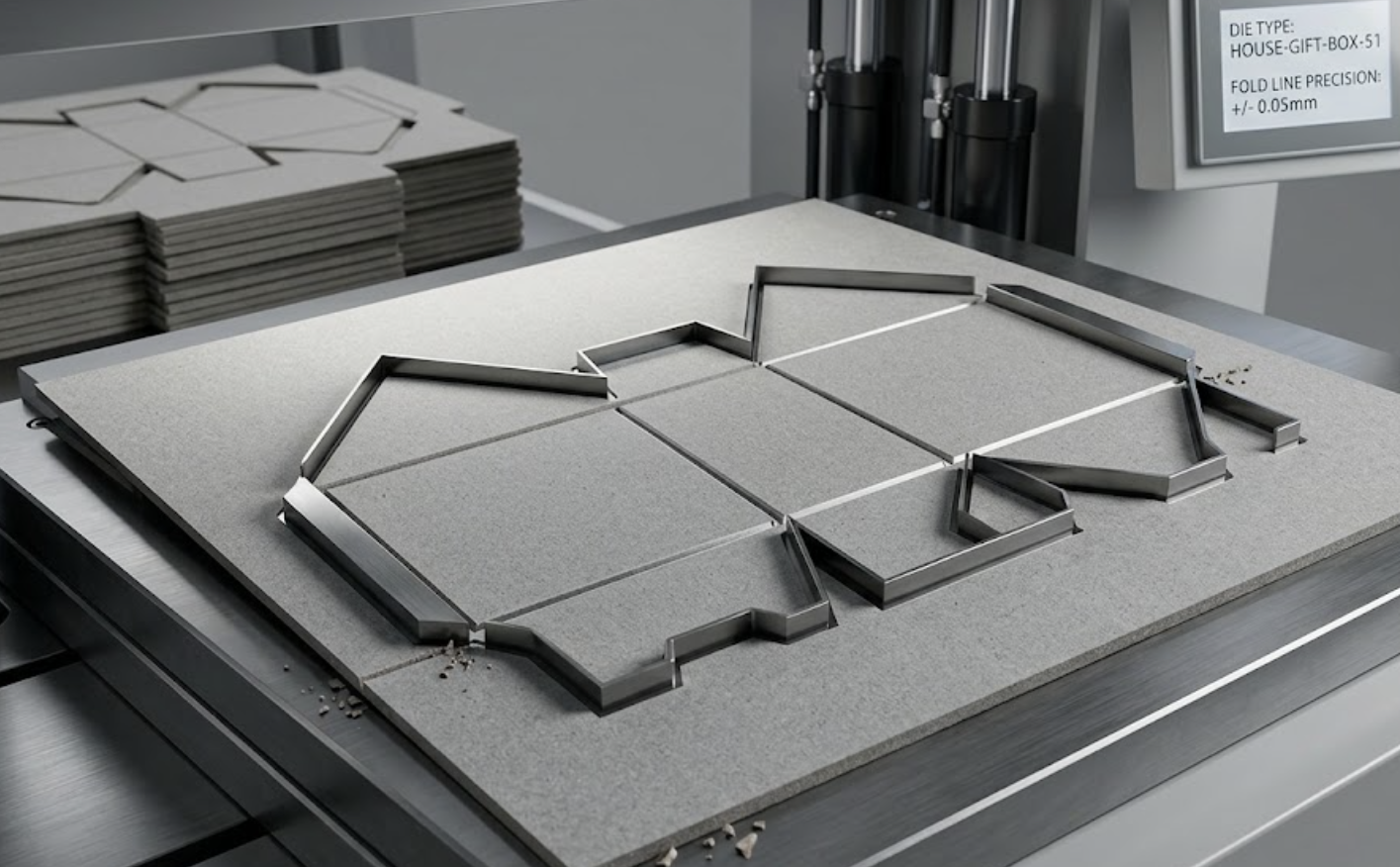
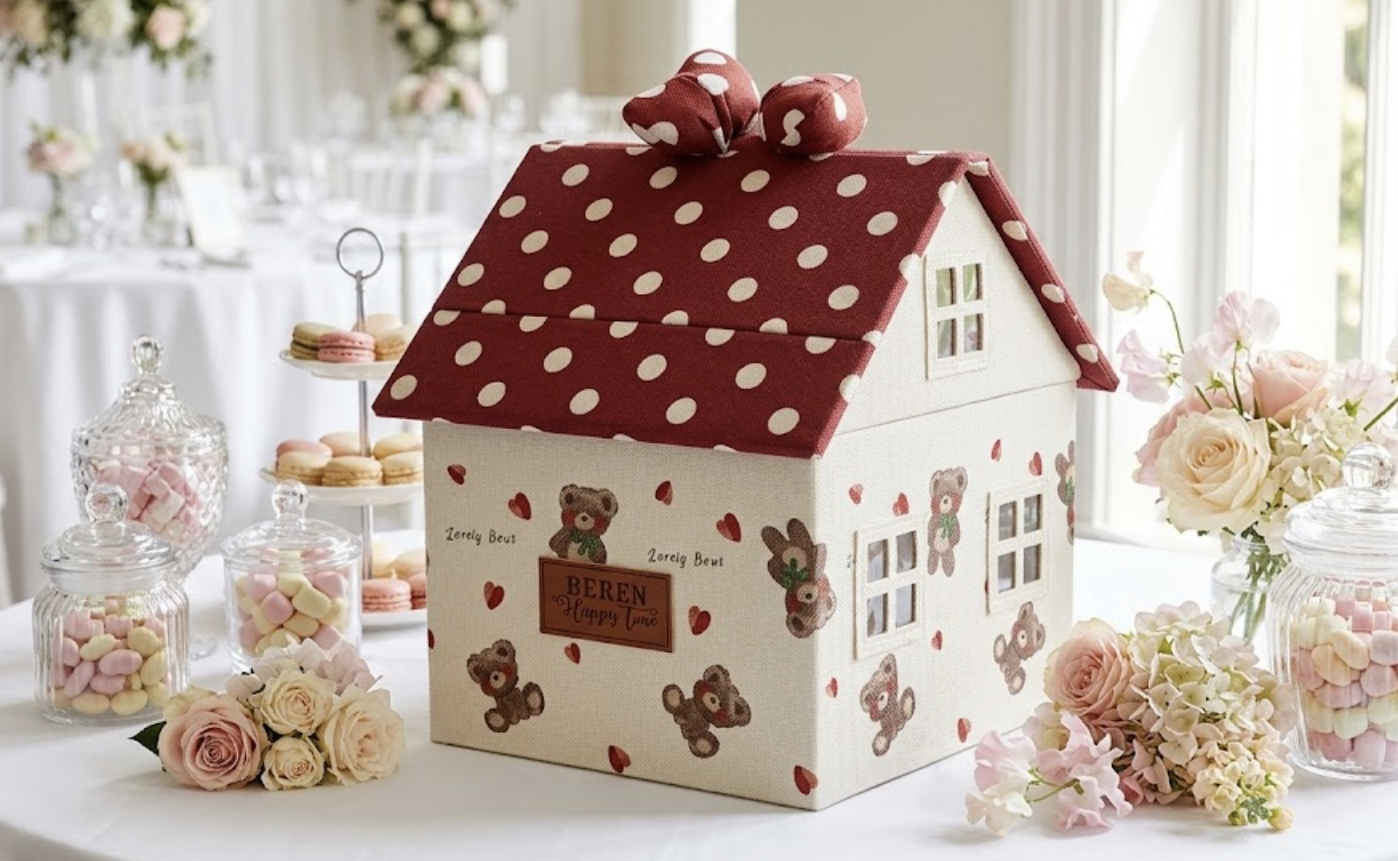
(Spin Digit Editorial):- Wenzhou, Zhejiang Oct 11, 2026 (Issuewire.com) – The confectionery and festive gift packaging sectors increasingly rely on three-dimensional architectural formats to elevate product presentation. Among these specialized designs, cottage-shaped rigid boxes featuring lid-and-base structures have emerged as popular options for wedding favors, baby showers, and holiday candy displays. Operating as an Advanced Cottage Shaped Candy Box Company (https://www.jinzecrafts.com/products/), specialized packaging manufacturers must solve complex structural challenges where angled roof panels meet rigid rectangular bases. Transforming flat paperboard and decorative fabric into a stable, cottage-shaped container demands precise die-cutting, scoring accuracy, and exact adhesive application. When international confectioners and retail brands source custom holiday packaging, they prioritize manufacturing partners capable of maintaining structural tolerances across high-volume orders. Analyzing the technical mechanics of novelty packaging helps procurement teams evaluate how specialized suppliers balance complex geometry with mass production consistency. Structural Engineering in Novel Packaging: Overcoming Tolerance Bottlenecks in Cottage-Shaped Formats Designing a cottage-shaped rigid box presents distinct geometric challenges that standard rectangular folding cartons do not encounter. Unlike flat-folding packaging, a three-dimensional house structure incorporates sloped gables, extended roof eaves, and a fitted lid assembly. For example, a square cottage container measuring 21.5 by 21.5 by 19 centimeters requires precise dimensional scoring to ensure the gabled roof lid settles flush over the main body. If the roof angle deviates by even a fraction of a millimeter, the lid will bind against the side walls or leave visible gaps along the eave line. Furthermore, wrapping rigid paperboard cores with woven fabric or decorative paper introduces material tension variables. When craftspeople laminate fabric onto angled board panels, uneven stretching causes seam distortion and corner puckering along the roof ridgeline. To overcome these physical limitations, packaging engineers utilize high-rigidity composite board cores and calibrated scoring dies. Precision creasing creates crisp fold lines, allowing the board to form sharp, clean corners without fracturing the outer fabric covering. Controlling structural geometry at every assembly step ensures that cottage-shaped containers retain their structural integrity during stacking, shipping, and retail display. Food-Adjacent Material Science: Ensuring Chemical Safety and Odorless Integrity for Confectionery Packaging Confectionery packaging demands strict material hygiene standards, as the container sits in close proximity to food items. Although wrapped candies, chocolates, and dragées do not touch the outer box directly, volatile organic compounds from inferior glues or synthetic dyes can migrate through paper wrappings. Consequently, high-end packaging manufacturers implement comprehensive raw material testing protocols to guarantee chemical safety and odorless performance. Maintaining material safety requires selecting non-toxic, food-adjacent substrates throughout the manufacturing process. Engineers specify odorless, water-based adhesives to bond outer fabric layers and interior paperboard linings. Additionally, printing departments utilize heavy-metal-free inks and low-volatile organic compound coatings for all decorative graphics. Implementing these material standards prevents organoleptic contamination, ensuring that stored sweets maintain their original taste and aroma profiles over extended shelf lives. Furthermore, rigorous chemical screening verifies that all packaging components comply with international consumer safety standards, such as European REACH regulations and North American food-contact guidelines. Balancing Mass Scalability with Customization: Precision Die-Cutting and Flexible OEM/ODM Engineering (https://www.jinzecrafts.com/products/exclusive-price-sample-click-here/) Achieving commercial success with novel packaging formats depends on a manufacturer’s ability to balance design flexibility with mass scalability. Retail brands frequently demand custom box dimensions, bespoke roof pitch angles, and unique surface textures to align with specific seasonal themes. Fulfilling these custom requests requires a flexible Original Equipment Manufacturing (OEM) and Original Design Manufacturing (ODM) framework supported by computer-assisted structural engineering. Advanced production starts with computer-driven CAD modeling, allowing structural designers to refine box geometry before cutting physical tooling. Once a design receives client approval, automated steel-rule die cutters produce precise flat blanks with micron-level accuracy. This digital prototyping workflow enables fast sample development while guaranteeing that high-volume production runs mirror the exact dimensions of the approved prototype. Furthermore, modular engineering allows factories to incorporate specialized embellishments, such as ribbon handles, embossed logos, and decorative window cutouts, without extending production lead times. Combining computer-aided structural design with automated die-cutting ensures that custom packaging runs achieve exceptional consistency across thousands of units. Engineering Execution at Scale: How Zhejiang Jinze Crafts Co.,Ltd Maintains Dimensional Consistency Executing complex structural packaging at scale requires a deep combination of industrial infrastructure and human expertise. Operating as an industry and trade integrated enterprise, Zhejiang Jinze Crafts Co.,Ltd (https://www.jinzecrafts.com/about/) exemplifies the technical capabilities necessary to produce precision rigid packaging for global markets. Backed by 25 years of specialized manufacturing history, the enterprise has developed refined assembly workflows that consistently resolve complex structural packaging challenges. Human craftsmanship remains the essential foundation of the company’s manufacturing stability. The factory operates a dedicated production facility staffed by 150 skilled employees, where every workshop artisan averages 20 years of individual crafting experience. This high level of retained expertise proves crucial when wrapping fabric around gabled roof lids and aligning intricate corner seams. Veteran craftspeople apply adhesives with exact uniformity, ensuring smooth fabric adhesion across angled surfaces without creating air bubbles or glue bleed. Furthermore, the enterprise maintains an established track record of supplying major multinational entities, including Walmart, Disney, and Sanrio in Japan, alongside leading German and British supermarket chains. Fulfilling the strict vendor standards of these global retail networks requires absolute commitment to quality control and international trade procedures. The facility maintains Business Social Compliance Initiative (BSCI) audit certification, verifying fair labor standards and safe working conditions across all workshops. In addition, holding proprietary design patents, such as structural patent ZL 2019 3 0394790.X, demonstrates the enterprise’s commitment to technical innovation and design protection. By unifying a quarter-century of manufacturing heritage, a 150-person veteran workforce, rigorous material safety controls, and mature export capabilities, specialized manufacturers provide global confectioners with dependable, high-precision packaging solutions. For detailed technical specifications regarding cottage-shaped rigid boxes, custom confectionery packaging, and international OEM/ODM services, visit https://www.jinzecrafts.com/.
Media Contact
More on Spindigit:
- Technical Precision and Design Flexibility in an Advanced Cottage Shaped Candy Box Company
- Bulk Solid Monitoring: Solutions Via A Custom High-Frequency Radar Level Transmitter Factory
- YTBIO Explains How to Choose Magnesium Glycinate for Supplement Formulations
- Christiane Scarpino and Bose Akadiri Receive National Recognition For Their Latest Books Through the NYC BIG BOOK AWARD®
- Precision Material Standards from a China High-Purity Quartz Glass Sheet Manufacturer under ISO 9001 Certification
Jinze Crafts
Source :Zhejiang Jinze Crafts Co.,Ltd
This article was originally published by IssueWire. Read the original article here.