(Spin Digit Editorial):- Shenzhen, Guangdong Jun 25, 2026 (Issuewire.com) – Geometric Profiles and Energy Volumetrics: ER26500 vs. ER34615
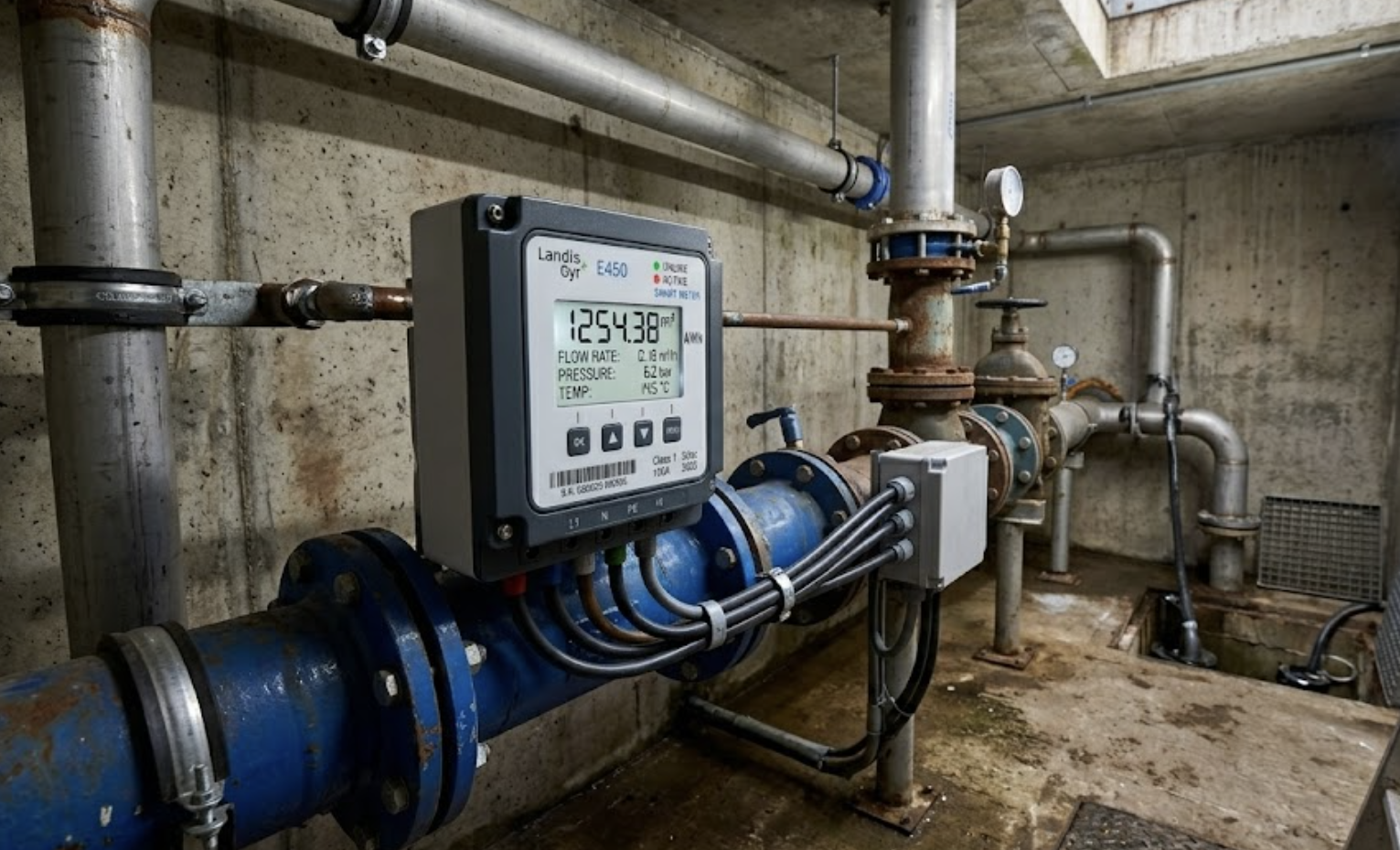
Smart utility metering infrastructure runs quietly in the background of modern city management — tracking water consumption in underground vaults, monitoring gas flow in remote pipeline stations, logging electricity usage across dense residential blocks. What keeps all of it running is a primary lithium cell that nobody ever sees, but whose selection determines whether the network holds together for a decade or requires expensive intervention years ahead of schedule. For hardware designers working in this space, sourcing from a proven China Top Smart Meter Battery Factory is a foundational decision, not an afterthought.
More on Spindigit:
- Mango AI’s AI Kissing Generator Adds Kissing Styles for Photo Animation
- 7 Benefits of Press Release Distribution Campaigns
- OXTP: From Blockchain Innovation to Global Digital Financial Connectivity
- The Empty Pockets Announce $285,000 “Billionaire Pricing” for Their New Album
- Peptides in Hanoi: Peptara Labs Rated 4.96 Out of 5 as Vietnam’s Peptide Supplier for 2026
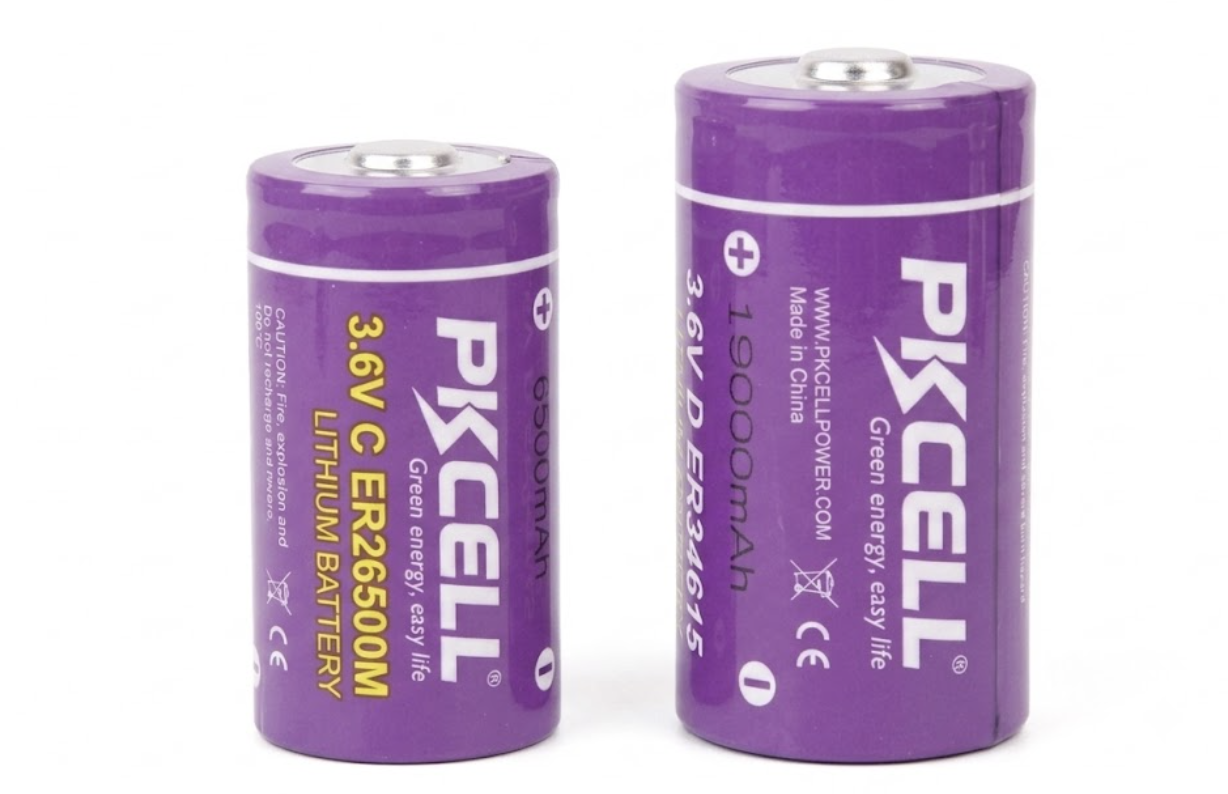
The comparison between the two most commonly specified Li-SOCl2 models — the ER26500 and the ER34615 — starts with physical geometry, because enclosure constraints often determine which cell is even viable before any other factor is considered. The ER26500 is a C-size cell: 26.2mm in diameter, 50.0mm tall, and approximately 55 grams. It fits comfortably into moderately sized meter housings and is a natural choice where space is genuinely limited. The ER34615 is the D-size counterpart: 34.2mm in diameter, 61.5mm tall, and around 107 grams. The larger casing isn’t just about weight — it’s what enables the capacity difference that makes the two cells suited to different application profiles.
On capacity, the gap is significant. The ER26500 delivers approximately 9,000mAh under low-current discharge conditions. The ER34615 provides roughly 19,000mAh — essentially double. That difference compounds over a fifteen-year deployment when transmission frequency, ambient temperature, and signal conditions all affect how quickly the energy reservoir depletes. Procurement managers who evaluate these cells purely on unit price tend to underestimate how much the capacity differential affects total cost of ownership over the full asset lifetime.
Long-Term Electrochemistry and Discharge Dynamics in Utility Environments
Both cells share the same fundamental chemistry: Lithium Thionyl Chloride at a nominal 3.6V. Li-SOCl2 is the standard for industrial metering applications for good reasons — high energy density, flat discharge curve, and an annual self-discharge rate below 1% under normal storage conditions. The passivation layer that forms on the lithium anode during idle periods is what makes that low self-discharge possible, acting as an internal barrier that slows unwanted chemical activity. It’s also the source of the voltage delay that engineers need to account for when devices wake from sleep mode to transmit data.
Where the two cells diverge electrochemically is surface area. The D-size ER34615 has a broader electrode surface, which means it handles transient current demands more readily when coming out of an idle state. Voltage recovery after a transmission burst is faster, and the cell tolerates heavier background currents with less passivation resistance. The C-size ER26500, with its smaller electrochemical surface, can exhibit a slightly longer recovery period — something that matters more in cold-climate installations where low temperatures compound the effect.
For applications where the ER26500’s capacity is right but a single cell doesn’t fully address the pulse handling requirement, multi-cell parallel configurations are a practical solution. PKCell (Shenzhen Pkcell Battery Co., Ltd.) manufactures custom battery packs using four ER26500 cells in a 1S4P parallel matrix, producing a 36,000mAh assembly with a low-profile physical layout that fits wide, shallow housing designs. This approach gets close to D-cell energy levels while preserving the height constraints that some meter enclosures impose.
The Engineering Selection Matrix: Matching Battery Profiles with Smart Meter Duty Cycles
The right cell for a given application depends primarily on the wireless protocol and transmission duty cycle. NB-IoT — the cellular standard increasingly used in advanced smart metering — draws multi-ampere pulse currents during broadcast cycles. If a meter is reporting multiple times daily over a cellular link, the ER34615’s larger chemical reservoir handles that repeated demand more comfortably over a decade-plus deployment. The capacity headroom matters because pulse frequency compounds energy consumption in ways that aren’t always intuitive from the spec sheet alone.
For applications on lower-power networks — LoRaWAN, wM-Bus — the energy budget is more forgiving, and the ER26500 becomes the more sensible choice. Compact water meter installations are a good example: underground pipe installations impose real physical constraints, and a C-size cell that fits the enclosure cleanly while delivering a ten-year operational lifespan is worth considerably more than a D-size cell that requires a housing redesign. A detailed comparison of ER26500 and ER34615 performance characteristics across different deployment scenarios can help engineering teams work through the tradeoffs specific to their application before locking in a specification.
Gas utility monitoring illustrates the economic stakes of getting this decision right. Remote pipeline monitoring stations are expensive to service — specialized access, sometimes in difficult terrain, with logistical lead times that make even a single unexpected truck roll costly. An underpowered cell that triggers early field maintenance doesn’t just create an operational problem; it revises the project’s financial model in ways that are difficult to recover from. Matching the cell to the actual duty cycle, rather than defaulting to whichever model is cheaper at the time of procurement, is where the long-term ROI calculation is actually made.
Factory Reliability and Supply Standardization: Why Global Utility Meter Brands Partner with PKCELL
Consistent field performance across thousands of endpoints starts with manufacturing consistency — something that’s harder to achieve at scale than it sounds. A batch of cells with even minor internal resistance variation can create energy imbalances in parallel pack configurations, accelerating degradation in the weaker cells and shortening the effective lifespan of the entire assembly. PKCell addresses this through automated cell-matching algorithms that scan open-circuit voltage and internal resistance on every unit before packaging, ensuring that cells entering a multi-cell configuration are genuinely matched rather than nominally compatible.
Automated spot welding handles the pack assembly process, replacing manual soldering methods that introduce thermal stress and joint inconsistency. In outdoor utility hardware exposed to temperature cycling over fifteen years, a weak weld is a latent failure — it may not surface immediately, but it tends to eventually. Laser micro-welding infrastructure at PKCell delivers precise, uniform electrical connections that hold up under the thermal and mechanical stress of real field conditions. Capacity grading procedures run on every production batch to confirm that finished cells meet defined performance baselines before they ship.
Regulatory compliance covers the full international certification stack: ISO 9001 quality management, CE, IEC 60086-4, and RoHS environmental directives, independently verified by third-party laboratories. For utility brands selling into regulated markets across multiple regions, having a supplier whose certifications are already in order — and whose documentation supports customs clearance without delays — is a practical supply chain advantage that becomes increasingly valuable as deployment programs scale up.
Corporate Website: https://www.pkcellpower.com/.
Media Contact
Shenzhen Pkcell Battery Co., Ltd.
902, Tower B, Hongrongyuan North Station Center, North Station Community, Minzhi Street, Longhua District, Shenzhen, China
Source :Shenzhen Pkcell Battery Co., Ltd.
This article was originally published by IssueWire. Read the original article here.